Read an EnergyGuide label before comparing appliance costs
Match the model and comparison category, then separate annual energy use from the label's assumed cost.
As an Amazon Associate I earn from qualifying purchases. How our shopping links work.
The short answer
Use comparable labels and the stated test assumptions. Annual kWh multiplied by an applicable local rate gives a rough energy-charge estimate, not a household bill forecast.
Find the model number on the yellow label
Open the EnergyGuide image for the exact appliance you are considering. Match its model number with the product page and your selected configuration. A comparison based on the label for a neighboring model can quietly change capacity, features, and the published energy estimate.
The label gives a standardized basis for comparing certain appliances sold in the United States. Its content varies by product category. Refrigerators and dishwashers, for example, can show estimated annual energy use and operating cost. Other categories use efficiency information suited to that equipment. Start with what the particular label actually reports.
The FTC explains that these figures use Department of Energy test procedures. They help compare similar products under specified assumptions. Your household's use and local energy rate determine what operating the appliance will cost you.
Read the comparison category before the scale
The range on the label compares the model with similar appliances. Read the capacity and features that define that comparison. A larger refrigerator may use more annual electricity while serving a different storage requirement. A dollar figure alone cannot establish which one fits your kitchen or household.
Keep the practical requirement fixed first. Write down the usable space, required capacity, and relevant features, then compare labels for appliances that meet that requirement. If you change the size category halfway through, note the change instead of treating the scale as a universal ranking.
Scroll to compare
| Label detail | Question it helps answer |
|---|---|
| Model number | Does the estimate belong to the exact appliance? |
| Capacity and listed features | Am I comparing a similar configuration? |
| Annual energy use, when shown | What standardized consumption estimate can I compare? |
| Estimated annual operating cost | What cost follows from the label's stated assumptions? |
| Comparison range | Which group of similar models supplies the reference? |
| Energy price or usage notes | What assumptions would differ in my home? |
Save the label image with the model name. That makes it easier to revisit a comparison when a store page changes or several tabs have similar-looking products.
Use annual kWh for a rate calculation
A kilowatt-hour is a unit of electrical energy. When an appliance label reports annual kWh, you can multiply that figure by an electricity rate to make a rough annual energy-charge estimate.
Suppose two hypothetical, otherwise suitable appliances list 450 kWh and 350 kWh per year. At an assumed rate of $0.18 per kWh, the arithmetic is:
Scroll to compare
| Hypothetical appliance | Calculation | Estimated annual energy charge |
|---|---|---|
| A | 450 kWh × $0.18 | $81 |
| B | 350 kWh × $0.18 | $63 |
The difference is $18 per year under those assumptions. These are invented comparison inputs for explaining the calculation, not measurements of products or a forecast for your home.
Use an applicable rate from your utility information. Fixed account charges do not usually change because one appliance uses fewer kWh, and time-varying rates need more detail than a single multiplication. The label's standardized consumption also cannot describe every temperature setting, cycle choice, or household routine.
Read the fine print under the large dollar amount
The FTC says the estimated operating cost uses typical use and a national average energy price. It is an estimate, so two labels using different assumptions deserve a closer look before you compare their dollar figures.
Look for the energy-rate note and any usage basis printed with the label. If the formats or categories differ, compare the corresponding consumption or efficiency measure and ask the manufacturer to clarify the rest. Do not turn an unclear label into a precise savings claim.
For an electrically powered appliance, nameplate watts and annual kWh answer different questions. The nameplate helps describe electrical requirements. Annual kWh reflects the specified usage and test method over time. Multiplying a maximum wattage by every hour of the year would not reproduce the label for an appliance that cycles or changes power during operation.
Keep ENERGY STAR and EnergyGuide distinct
ENERGY STAR identifies products that meet the program's efficiency criteria. The yellow EnergyGuide supplies comparison information for covered categories. An appliance can display both, but they do different jobs.
Use the exact EnergyGuide figures to compare suitable models even when several carry ENERGY STAR. The presence of that logo does not tell you which of those models has the lowest published annual consumption, nor which has the capacity you need.
Not every household product has an EnergyGuide label. If a covered appliance's label is missing from the display, the FTC suggests looking inside the appliance or on the manufacturer's or seller's website. Check the exact model instead of substituting a generic label from an image search.
Put the estimate beside the practical fit
Once the labels are comparable, record the annual energy figure alongside the appliance's dimensions and installation requirements. A lower estimate is useful only for an appliance you can install and use as intended. For a compact kitchen, checking the microwave's opening and ventilation clearances is a separate fit task.
Carry the exact model and label into an appliance comparison. A promotion supplies no evidence about annual consumption. Keep the label's assumptions visible, use your own relevant rate carefully, and retain the source image with your notes so you can explain where the estimate came from.
We may earn a commission from qualifying purchases.
Compare an offer only after the exact appliance and its EnergyGuide information meet your requirements.
Browse Amazon Deals Explore appliances with EnergyGuide information on AmazonOpens Amazon.com. Keep purchase price and the estimated annual operating cost as separate comparisons. Check the exact model, seller, and current terms before ordering.
A useful next read.
Keep the whole purchase in view.
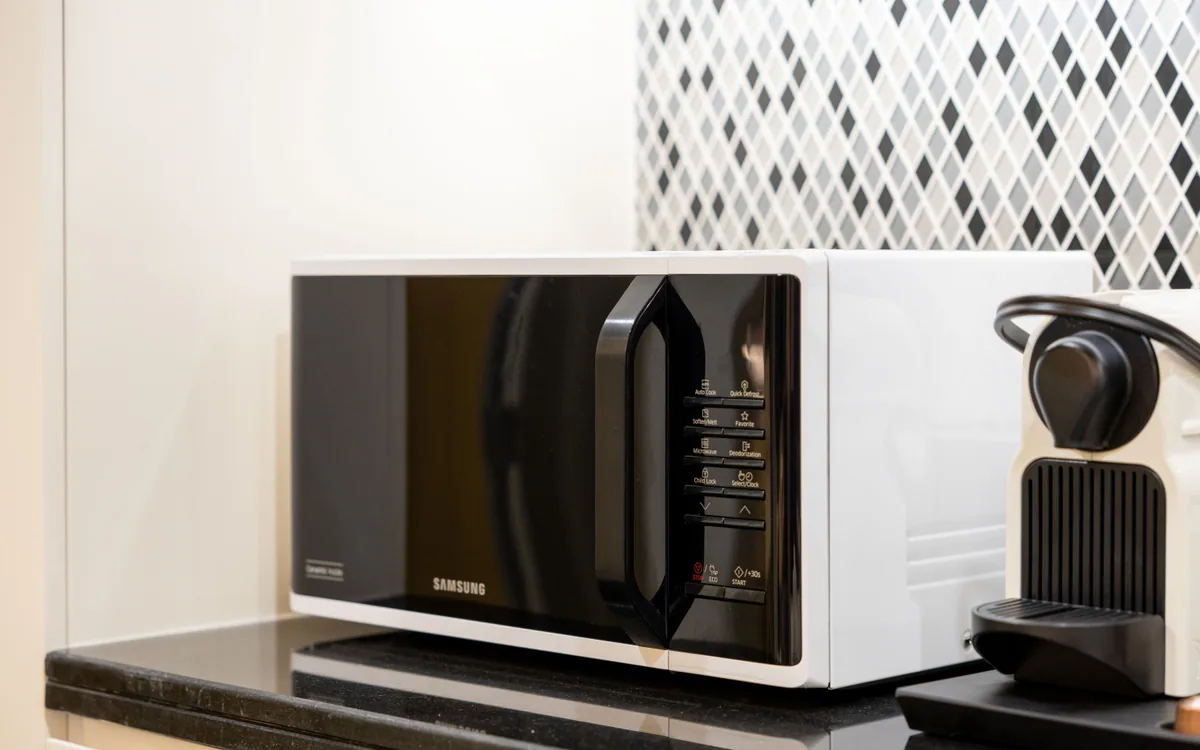
Choose a countertop microwave around the dishes you use
Check your everyday dishes, door swing, and required ventilation before giving up counter space.
Read the guide
Check UL or ETL listing details for the exact product
Trace the mark, model designation, and certification scope instead of relying on a logo in a listing.
Read the guide
Compare appliance noise ratings with the test conditions attached
Identify the unit, measurement type, operating mode, and test method before ranking noise figures.
Read the guide