Choose an air purifier by CADR and the room it serves
Match particle CADR, ceiling height, and the operating speed you will use before trusting a coverage label.
As an Amazon Associate I earn from qualifying purchases. How our shopping links work.
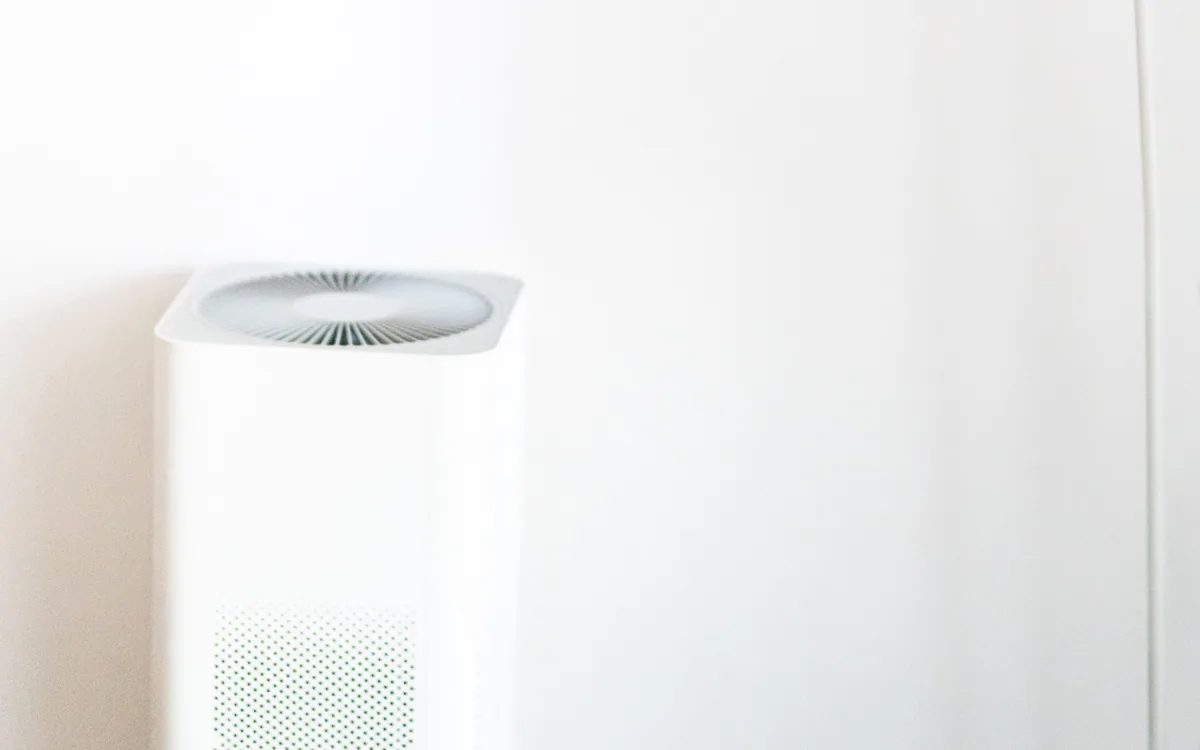
The short answer
Define the room, check the smoke CADR and sizing assumptions, then verify placement and filter access. A maximum-speed rating does not establish the output of a quiet mode.
Define the room before comparing coverage claims
A purifier beside a bed and a purifier in an open living area have different spaces to serve. Measure the length and width of the area where it will operate. Include the connected area when an open layout allows air to move freely beyond the patch of floor beside the machine.
Draw the boundary on a simple floor plan. A doorway that stays open can make a bedroom label less useful than it first appears. A device on a hallway table should not be assumed to clean several closed rooms through their doors.
For a first comparison, choose one defined room and note the ceiling height. This gives the manufacturer's room-size claim something concrete to match.
Read the three CADR numbers
Clean air delivery rate, usually abbreviated CADR, describes the volume of filtered air a cleaner delivers under a defined test. AHAM's program reports separate values for tobacco-smoke particles, dust, and pollen. These represent different particle sizes; they are not interchangeable scores for every pollutant.
Use the smoke CADR when applying AHAM's general room-sizing rule. AHAM advises a smoke CADR of at least two-thirds of room area in square feet, with the sizing assumption of an 8-foot ceiling. Its guidance calls for a larger-rated unit when ceilings are higher.
A HEPA label describes a filter characteristic. CADR adds the delivered-air part of the comparison. Record both the particle category and unit beside the number, particularly when one listing uses cubic meters per hour and another uses cubic feet per minute.
Work through a room with a high ceiling
Consider a hypothetical 12-by-15-foot room. Its floor area is 180 square feet. Applying the general two-thirds rule gives a starting smoke CADR of 120 cfm for the ordinary ceiling-height assumption.
With an 8-foot ceiling, the room volume is 1,440 cubic feet. Raise the ceiling to 10 feet and that volume becomes 1,800 cubic feet, an increase of 25 percent. The floor area has stayed the same, but there is more air in the space.
That volume calculation explains why a floor-area label needs its ceiling assumption. It does not prove that adding exactly 25 percent to any product's CADR will achieve a particular result. Check the maker's stated room size, air-change basis, and ceiling guidance, then look for a larger suitable rating.
Scroll to compare
| Figure you find | What to keep beside it |
|---|---|
| Smoke CADR | Units, exact model, and tested operating setting |
| Dust or pollen CADR | Particle category; do not silently substitute for smoke |
| Recommended room area | Ceiling height and stated air-change basis |
| Quiet or sleep mode | Filtration data for that setting, if published |
| Whole-home coverage | Conditions supporting the claim and rooms actually connected |
Match the rating to a speed you will use
The EPA explains that CADR is typically measured at the highest speed. Lowering the fan speed generally reduces the air filtered. A sleep-mode sound claim and a maximum-speed room-size claim can therefore describe different operating conditions.
If the purifier will sit in a room where you take calls or sleep, look for filtration and sound information at the same setting. When that paired information is missing, keep the uncertainty visible in your shortlist. Do not assume the quietest mode retains maximum performance.
A larger candidate may offer more flexibility, but its label alone cannot establish the output of an undocumented lower setting. The useful question for the manufacturer is specific: what CADR or room-sizing guidance applies at the speed you expect to run?
Leave an air path and a filter-removal path
Use the product manual to place the purifier with its required clearances. Look at the air inlet and outlet locations. A curtain, sofa, or deep shelf can occupy the space the appliance needs even when its base fits neatly.
Check filter access before choosing a corner. Some designs open from the bottom; others need a rear or front panel removed. Plan where you will set the unit and used filter during a replacement. A layout that requires disconnecting several nearby devices each time can discourage routine upkeep.
Record the exact replacement-filter part number with the purifier model. Compare the whole replacement assembly, including any separate prefilter, rather than assuming a generic filter with the same exterior shape is suitable.
Keep particle ratings separate from other claims
Particle CADR does not establish gas or odor removal. The EPA describes activated carbon or other gas-specific filtration as a separate function and notes that widely used gas-removal ratings are lacking. Check what the exact product claims and the amount and type of media it uses.
The EPA also advises avoiding devices that intentionally produce ozone. A feature list containing an ionizer or another treatment technology deserves a check of the manufacturer's documentation and applicable verification records. It should not receive an automatic performance bonus.
Choose a purifier after the defined room, documented CADR, usable operating setting, placement, and replacement filter all agree. These checks help compare products; they do not promise a health outcome or complete removal of indoor pollutants. For the sound figures on your shortlist, use the guide to appliance noise ratings to keep measurement conditions attached.
We may earn a commission from qualifying purchases.
Explore room air purifiers on AmazonOpens Amazon.com. Check the exact model, seller, and current terms before ordering.
A useful next read.
Keep the whole purchase in view.

Evaporative or ultrasonic humidifier: compare water and upkeep
Compare mineral handling, wick or cartridge upkeep, tank access, and the refill work you can maintain.
Compare the options
Compare appliance noise ratings with the test conditions attached
Identify the unit, measurement type, operating mode, and test method before ranking noise figures.
Read the guide
Set up a first apartment by the jobs you need to do
Use the first week to finish daily tasks, measure the awkward spaces, and buy for the problems that repeat.
Read the guide